
How long does it take to make Shiso Microgreen Sushi Rolls with Avocado?
This recipe takes approximately 20 min total.
20 min
· Serves 2
· Updated March 16, 2026
South First location, 9AM–1PM. See market details →
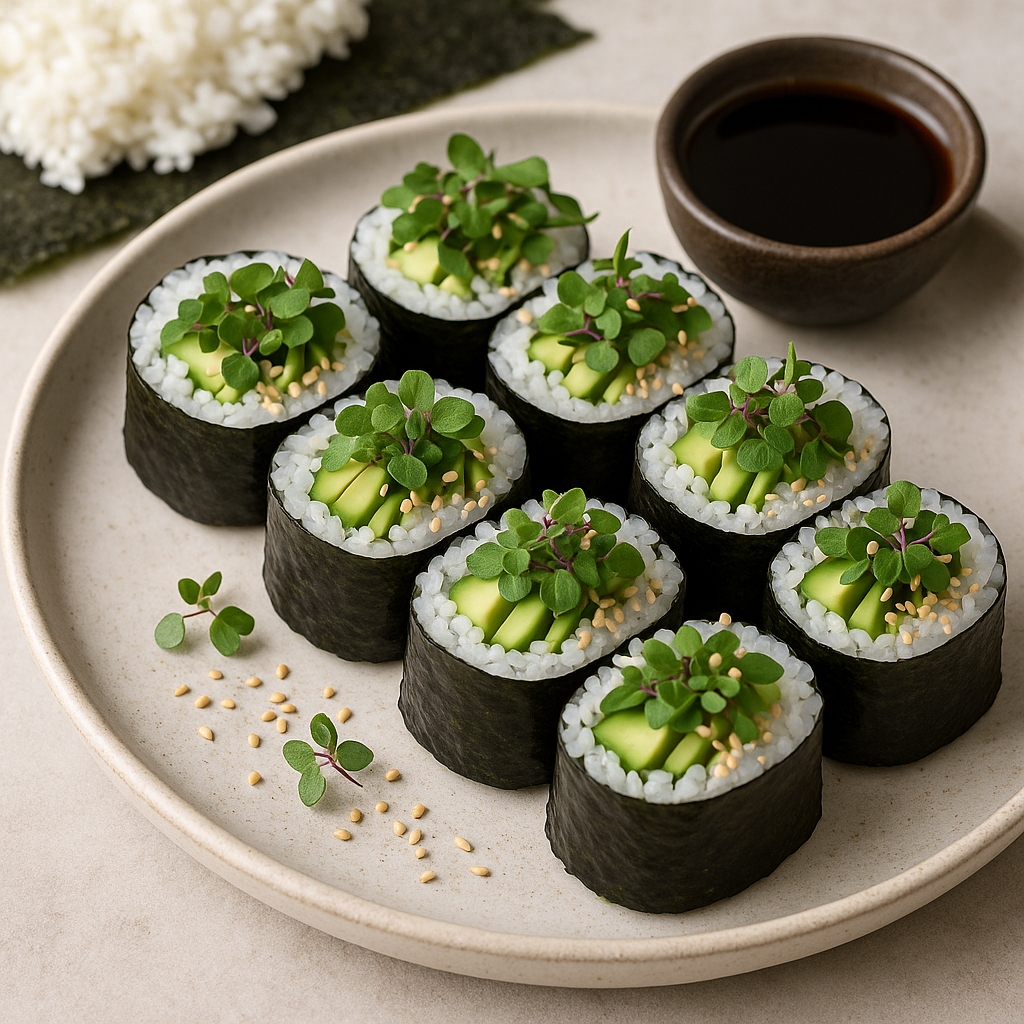
Shiso microgreens are best added fresh as a finishing ingredient. These sushi rolls bring a fresh twist with shiso microgreens, adding a unique herbal flavor to the classic avocado filling.
This recipe takes approximately 20 min total.
Shiso microgreens work best as a fresh finishing ingredient, adding color, texture, and a just-cut flavor that stands out right before serving.
1 cup sushi rice, cooked
4 sheets nori seaweed
1 ripe avocado, sliced
1/2 cup cucumber, julienned
1/2 cup shiso microgreens
Soy sauce, for serving
Sesame seeds, for garnish
Place a sheet of nori on a bamboo sushi mat, shiny side down, and spread 1/4 of the cooked sushi rice evenly over the nori, leaving a 1-inch border at the top.
Layer avocado slices, cucumber sticks, and a generous handful of shiso microgreens across the rice.
Using the bamboo mat, carefully roll the sushi away from you, pressing gently but firmly as you roll to keep the filling tight.
Seal the edge with a little water, then slice the roll into bite-sized pieces and sprinkle with sesame seeds.
Serve with soy sauce for dipping.
Shiso microgreens carry the same complex aromatic profile as mature shiso — anise, umami, and mild bitterness — and are used in Japanese and East Asian culinary traditions as a direct garnish substitute. Evidence on shiso specifically is limited; claims below reflect general microgreen research.
• Shiso and perilla microgreens contain volatile aromatic compounds responsible for their distinctive anise-like flavor.
moderate evidence• Nutrient and phytochemical content in shiso microgreens varies by variety and growing conditions.
strong evidence1. Assessment of Vitamin and Carotenoid Concentrations of Emerging Food Products: Edible Microgreens — Journal of Agricultural and Food Chemistry, 2012
2. Microgreens: Production, Shelf Life, and Bioactive Components — Critical Reviews in Food Science and Nutrition, 2017