
How long does it take to make Pea Microgreen Pesto Pasta?
This recipe takes approximately 20 min total.
20 min
· Serves 2
· Updated March 30, 2026
South First location, 9AM–1PM. See market details →
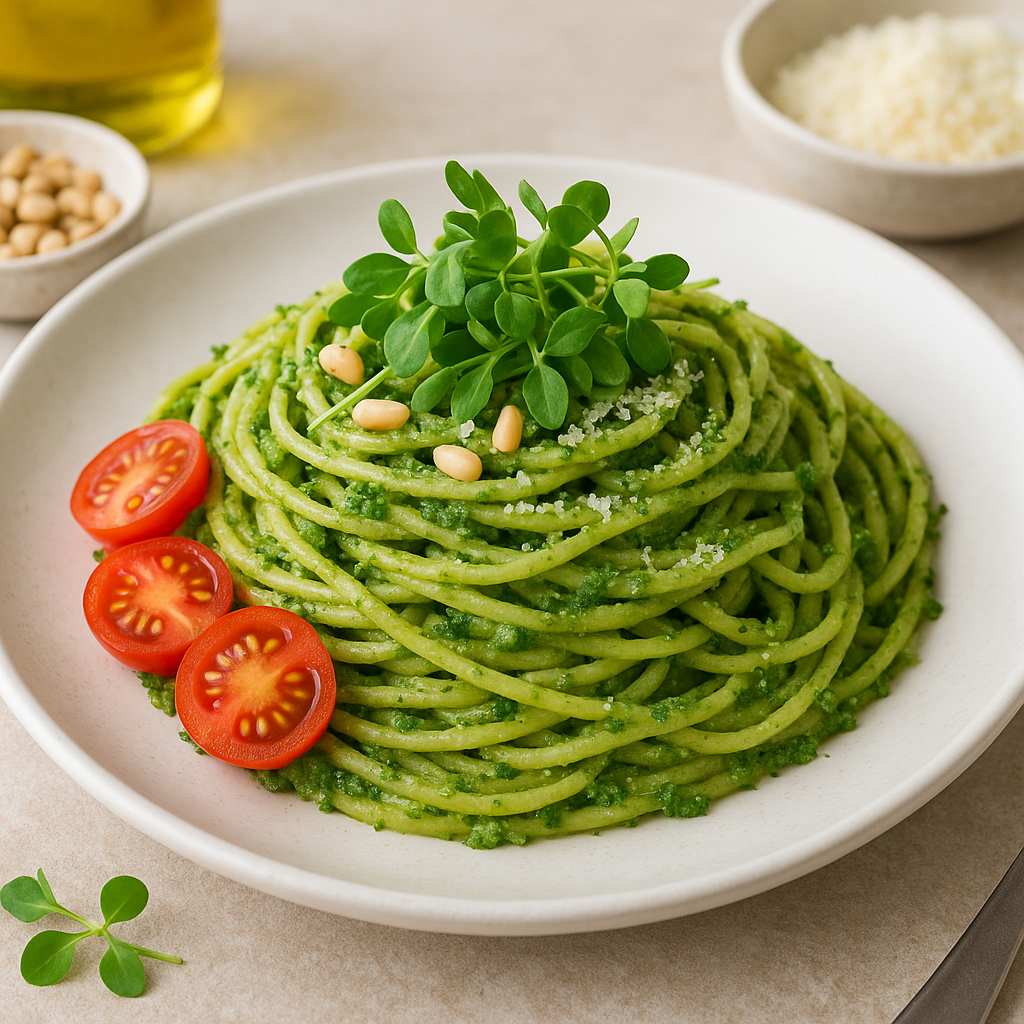
Pea microgreens are best added fresh as a finishing ingredient. A refreshing twist on traditional pesto, this vibrant sauce features pea microgreens for a unique flavor and nutrient boost.
This recipe takes approximately 20 min total.
Pea microgreens work best as a fresh finishing ingredient, adding color, texture, and a just-cut flavor that stands out right before serving.
8 oz pasta of choice (e.g., spaghetti, penne)
1 cup of fresh pea microgreens
1/4 cup of pine nuts
1/4 cup of grated Parmesan cheese
1/2 cup of olive oil
2 cloves garlic
Salt and pepper to taste
Cherry tomatoes for garnish
Cook the pasta according to package instructions until al dente, then drain and set aside.
In a food processor, combine pea microgreens, pine nuts, Parmesan, garlic, salt, and pepper; blend until coarsely chopped.
Slowly drizzle in olive oil while blending until the pesto reaches your desired consistency.
Toss the cooked pasta with the pea microgreen pesto until well-coated.
Serve with halved cherry tomatoes on top for a burst of color and flavor.
Pea shoot microgreens are among the most versatile and broadly used microgreens in professional kitchens. They are known for their sweet, vegetal flavor, tender texture, and high visual yield per tray. Evidence on pea shoots typically focuses on protein content and vitamin profile relative to other legume sprouts.
• Pea shoots and young legume sprouts have been studied for their amino acid profile and vitamin C content.
moderate evidence• Flavor, texture, and nutrient content in pea shoots vary by variety, temperature, and harvest stage.
strong evidence• Pea shoots are commonly used raw as a salad base or garnish where cooking is not applied.
strong evidence1. Assessment of Vitamin and Carotenoid Concentrations of Emerging Food Products: Edible Microgreens — Journal of Agricultural and Food Chemistry, 2012
2. Microgreens: Production, Shelf Life, and Bioactive Components — Critical Reviews in Food Science and Nutrition, 2017