
How long does it take to make Swiss Chard Microgreen Omelette with Goat Cheese?
This recipe takes approximately 10 min total.
10 min
· Serves 1
· Updated March 30, 2026
South First location, 9AM–1PM. See market details →
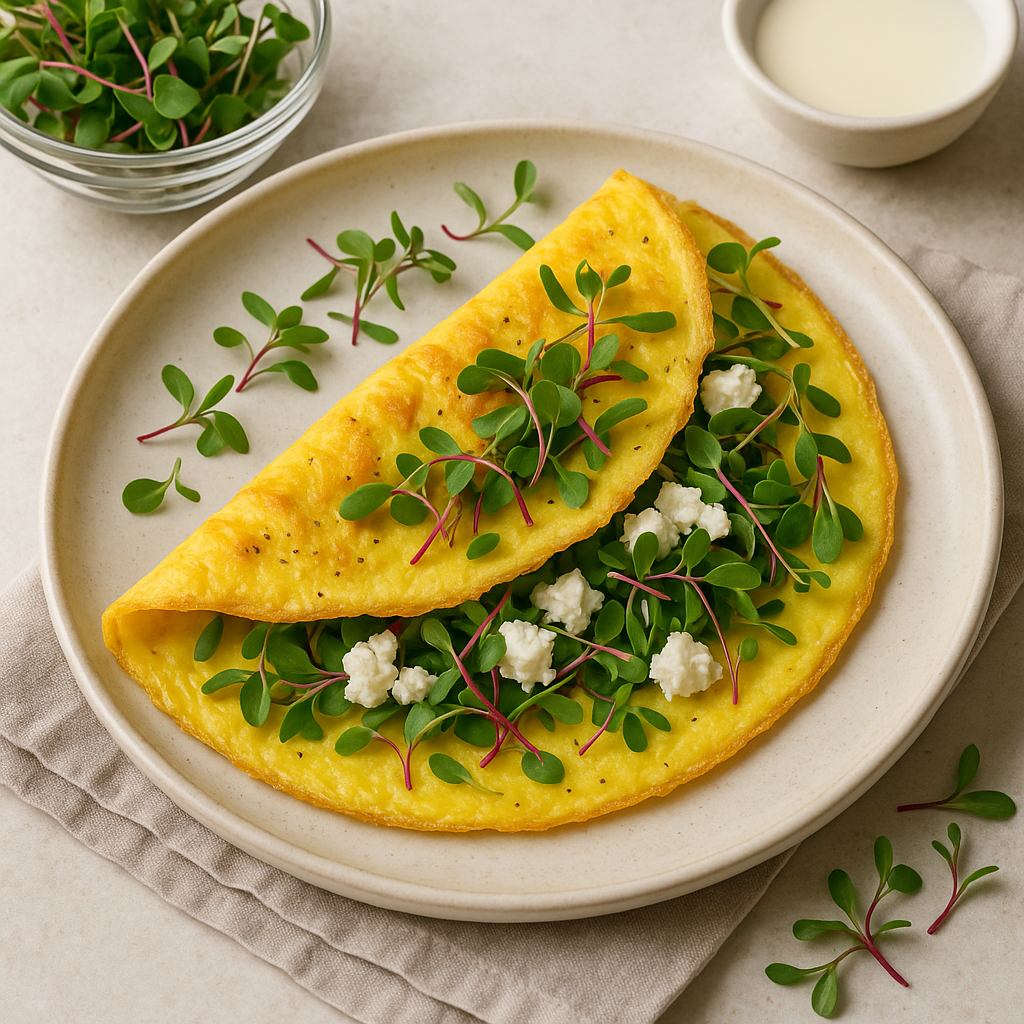
Swiss Chard microgreens are best added fresh as a finishing ingredient. This quick and nutritious omelette is packed with the vibrant flavor of Swiss chard microgreens and creamy goat cheese, perfect for a healthy breakfast or brunch.
This recipe takes approximately 10 min total.
Swiss Chard microgreens work best as a fresh finishing ingredient, adding color, texture, and a just-cut flavor that stands out right before serving.
2 large eggs
1/2 cup Swiss chard microgreens
1 oz goat cheese, crumbled
1 tablespoon milk
1 tablespoon olive oil
Salt and pepper to taste
In a bowl, whisk together eggs, milk, salt, and pepper until well combined.
Heat olive oil in a non-stick skillet over medium heat, then pour in the egg mixture.
As the eggs begin to set, sprinkle Swiss chard microgreens and goat cheese on one half of the omelette.
Fold the omelette in half and cook for an additional 1-2 minutes until the cheese is slightly melted.
Slide onto a plate and serve immediately.
Swiss chard microgreens are distinguished by their vivid stem colors — red, yellow, and white — which come from betalain pigments, the same compound class found in amaranth and beets. They are used as a visual garnish, salad component, and smoothie green.
• Swiss chard and Swiss chard microgreens contain betalain pigments, the same class of compounds studied in amaranth, beets, and other brightly colored plants.
moderate evidence• Swiss chard is a recognized dietary source of vitamin K, magnesium, and beta-carotene (a Vitamin A precursor).
moderate evidence• Pigment intensity and nutrient content in Swiss chard microgreens vary by stem color variety and growing conditions.
strong evidence1. Assessment of Vitamin and Carotenoid Concentrations of Emerging Food Products: Edible Microgreens — Journal of Agricultural and Food Chemistry, 2012
2. Microgreens: Production, Shelf Life, and Bioactive Components — Critical Reviews in Food Science and Nutrition, 2017