
How long does it take to make Sunflower Microgreen Pesto Pasta?
This recipe takes approximately 25 min total.
25 min
· Serves 2
· Updated March 28, 2026
South First location, 9AM–1PM. See market details →
Sunflower microgreens are best added fresh as a finishing ingredient. A delightful pasta dish that blends the nutty flavor of sunflower microgreens into a fresh pesto, offering a unique take on a classic favorite.
This recipe takes approximately 25 min total.
Sunflower microgreens work best as a fresh finishing ingredient, adding color, texture, and a just-cut flavor that stands out right before serving.
8 oz pasta of choice (e.g., spaghetti or penne)
1 cup sunflower microgreens
1/4 cup walnuts or pine nuts
1/4 cup grated Parmesan cheese (or nutritional yeast for vegan)
1 garlic clove, minced
1/4 cup olive oil
Salt and pepper to taste
Cherry tomatoes, for garnish
Cook the pasta according to package instructions until al dente, then drain and set aside.
In a food processor, combine sunflower microgreens, nuts, Parmesan cheese, garlic, salt, and pepper, then pulse until finely chopped.
With the processor running, slowly add olive oil until a smooth pesto forms.
Toss the cooked pasta with the sunflower microgreen pesto until well coated.
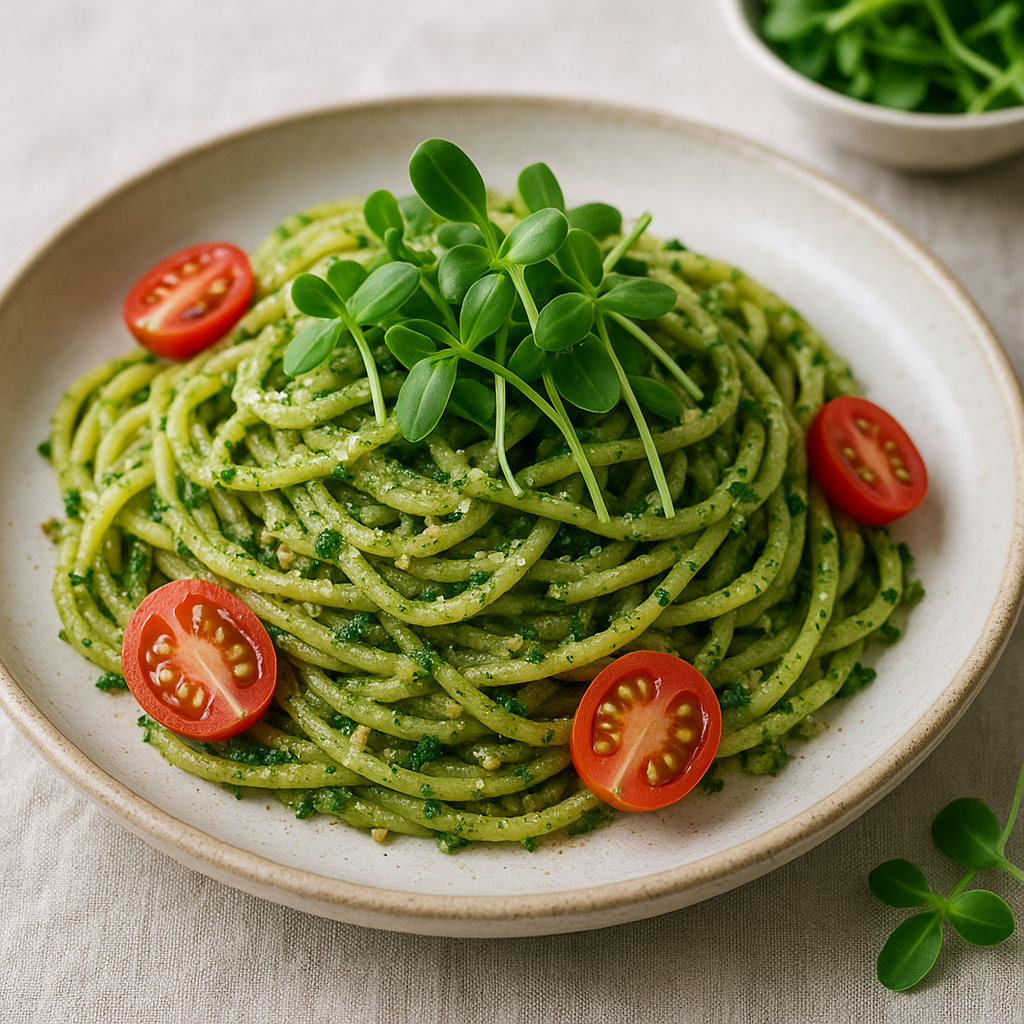
Serve warm, garnished with halved cherry tomatoes and extra sunflower microgreens.
Sunflower microgreens are often chosen for their combination of texture, culinary versatility, and nutrient density. Research on microgreens generally focuses on concentrated vitamins, minerals, and phytochemicals relative to mature vegetables, while noting that values vary by crop, growing conditions, and harvest timing.
• Microgreens have been studied for concentrated nutrient and phytochemical content relative to mature vegetables.
moderate evidence• Nutrient composition varies substantially by species, growing conditions, and post-harvest handling.
strong evidence• Using microgreens fresh preserves texture and may better retain some heat-sensitive qualities compared to prolonged cooking.
limited evidence1. Assessment of Vitamin and Carotenoid Concentrations of Emerging Food Products: Edible Microgreens — Journal of Agricultural and Food Chemistry, 2012
2. Microgreens: Production, Shelf Life, and Bioactive Components — Critical Reviews in Food Science and Nutrition, 2017