
How long does it take to make Creamy Swiss Chard Microgreens Soup?
This recipe takes approximately 25 min total.
25 min
· Serves 2
· Updated March 25, 2026
South First location, 9AM–1PM. See market details →
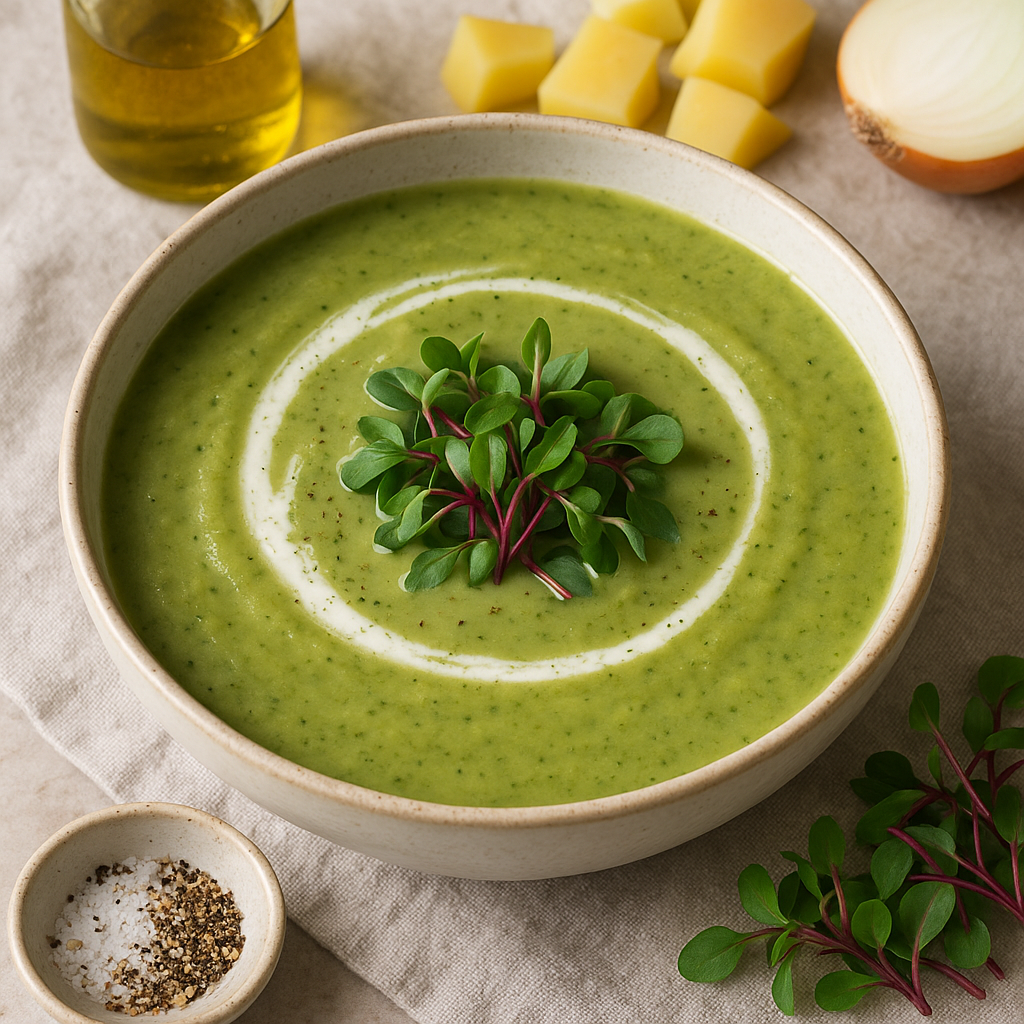
Swiss Chard microgreens are best added fresh as a finishing ingredient. This silky soup features Swiss chard microgreens blended with potatoes and garlic for a comforting and nourishing dish.
This recipe takes approximately 25 min total.
Swiss Chard microgreens work best as a fresh finishing ingredient, adding color, texture, and a just-cut flavor that stands out right before serving.
1 tablespoon olive oil
1 small onion, chopped
2 cloves garlic, minced
1 medium potato, peeled and diced
2 cups vegetable broth
1 cup Swiss chard microgreens
Salt and pepper to taste
1 tablespoon cream (optional)
In a pot, heat the olive oil over medium heat and sauté the onion until translucent, about 5 minutes.
Add the garlic and diced potato, cooking for another 2-3 minutes until fragrant.
Pour in the vegetable broth and bring to a boil, then reduce to a simmer for 10 minutes or until the potato is tender.
Stir in the Swiss chard microgreens and cook for 2 minutes before using an immersion blender to puree the soup until smooth.
Season with salt and pepper, add cream if desired, and serve warm.
Swiss chard microgreens are distinguished by their vivid stem colors — red, yellow, and white — which come from betalain pigments, the same compound class found in amaranth and beets. They are used as a visual garnish, salad component, and smoothie green.
• Swiss chard and Swiss chard microgreens contain betalain pigments, the same class of compounds studied in amaranth, beets, and other brightly colored plants.
moderate evidence• Swiss chard is a recognized dietary source of vitamin K, magnesium, and beta-carotene (a Vitamin A precursor).
moderate evidence• Pigment intensity and nutrient content in Swiss chard microgreens vary by stem color variety and growing conditions.
strong evidence1. Assessment of Vitamin and Carotenoid Concentrations of Emerging Food Products: Edible Microgreens — Journal of Agricultural and Food Chemistry, 2012
2. Microgreens: Production, Shelf Life, and Bioactive Components — Critical Reviews in Food Science and Nutrition, 2017