
How long does it take to make Basil Microgreens Pesto Pasta (15-Minute Vegetarian Dinner)?
This recipe takes approximately 15 min total.
15 min
· Serves 2
· Updated April 6, 2026
South First location, 9AM–1PM. See market details →
Basil microgreens are best added fresh as a finishing ingredient. Basil microgreens make a better pesto than mature basil leaves — the flavor is more concentrated, the color is vivid green without blanching, and the texture blends silky-smooth in under 60 seconds. This no-cook pesto comes together while your pasta water heats, which is why this dish reliably lands on the table in 15 minutes. The key technique is reserving pasta water before draining: that starchy liquid emulsifies the olive oil into the pesto and turns it from a thick paste into a sauce that coats every strand. ChefPax Dark Opal Basil or standard basil microgreens both work here — Dark Opal adds a subtle anise note and a slight purple tint to the finished pasta.
This recipe takes approximately 15 min total.
Basil microgreens work best as a fresh finishing ingredient, adding color, texture, and a just-cut flavor that stands out right before serving.
8 oz pasta (spaghetti, linguine, or bucatini)
2 cups basil microgreens, loosely packed (about 1.5 oz)
1/4 cup pine nuts, toasted until golden
1/3 cup Parmesan, freshly grated (plus more to finish)
1 clove garlic, roughly chopped
3 tbsp extra-virgin olive oil
1/2 lemon, juiced (about 1.5 tbsp)
Kosher salt and freshly cracked black pepper
Optional: 1 tbsp pasta water for thinning
Toast the pine nuts first while the water heats. Add them to a dry skillet over medium-low heat and stir constantly for 3–4 minutes until golden on most sides — they go from raw to burned faster than you expect, so pull them from the heat as soon as you see color. Set aside to cool. Salted, boiling pasta water next: use a large pot with at least 4 quarts of water and season generously with kosher salt — it should taste faintly of the sea. This is your only chance to season the pasta itself.
Cook the pasta to al dente — typically 1 minute less than the package directs. You want a slight bite in the center because the pasta will continue cooking briefly once it hits the warm pesto. Before draining, scoop out 1/4 cup of the starchy cooking water with a ladle or measuring cup and set it aside. This step is non-negotiable — the pasta water is what transforms the pesto from a paste into a coating sauce.
Build the pesto while the pasta cooks. Combine the basil microgreens, cooled pine nuts, Parmesan, garlic, olive oil, and lemon juice in a blender or food processor. Blend on high for 20–30 seconds until completely smooth. Taste and adjust: more lemon if it needs brightness, more Parmesan if it needs body, a pinch of salt if it tastes flat. The pesto should be bright green, thick, and just barely pourable. If it looks too pasty, add 1 tablespoon of pasta water now and blend again for 10 seconds.
Drain the pasta and immediately transfer it to a large bowl — not the pot, which holds heat and will overcook the greens. Add the pesto and toss vigorously while everything is still hot. Add reserved pasta water 1 tablespoon at a time, tossing between additions, until the sauce loosens and coats every strand without pooling at the bottom of the bowl. You may use 1–3 tablespoons depending on the pasta shape. The finished dish should look glossy and bright green.
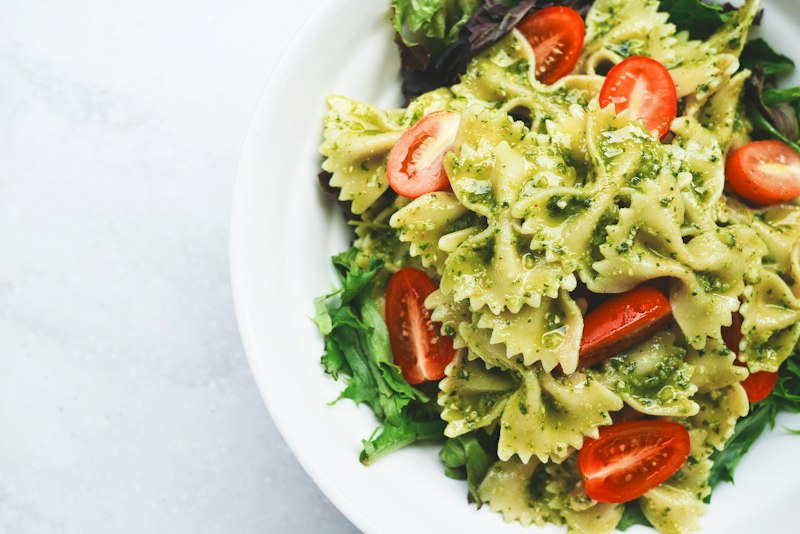
Plate and finish. Divide into warmed bowls and top with extra Parmesan shaved directly over the top, the remaining toasted pine nuts, and a few loose basil microgreens placed on top without pressing them flat — they should look fresh and alive, not wilted into the dish. A few drops of good olive oil over the top and a crack of black pepper complete the plate. Serve immediately — pesto pasta waits for no one.
Basil microgreens carry the recognizable aromatic profile of fresh basil — linalool, eugenol, and other volatile compounds — and are used as a direct 1:1 garnish substitute for fresh basil in small quantities. Dark Opal Basil adds additional anthocyanin-based purple pigmentation.
• Basil and its aromatic relatives contain volatile essential oil compounds studied for flavor, aroma, and culinary stability.
moderate evidence• Essential oil profile in basil microgreens varies by cultivar, with purple basil varieties known for anthocyanin pigmentation.
strong evidence1. Assessment of Vitamin and Carotenoid Concentrations of Emerging Food Products: Edible Microgreens — Journal of Agricultural and Food Chemistry, 2012
2. Microgreens: Production, Shelf Life, and Bioactive Components — Critical Reviews in Food Science and Nutrition, 2017
Classic Caprese flavors on toast with fresh basil microgreens and mozzarella.
Classic margherita pizza pulled hot from the oven and finished with a pile of fresh basil microgreens in place of whole-leaf basil.